Propane gas fire pits are the easiest to ignite, as they normally come with an ignition button. Clean up is a breeze as 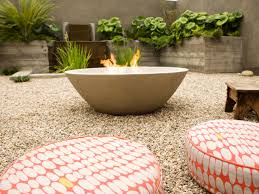 there are no ashes to worry about.
They also usually include lava stones or logs as an added design element which really adds to the ambiance of your patio, backyard or outdoor living space. These units are also smoke-free, allowing you to enjoy the warmth of a fire without the hassle of smoke.
Disadvantages lie with the propane tank. While some high-end brands include a compartment to house the propane tank, other models require the tank to be placed outside the unit. If having a visible 20lb propane tank on your patio is not the look you are going for, you will need to find a proper location to hide it.
Natural Gas Fire Pits
Natural gas fire pits are a high-end solution that requires professional installation. However, it is a fantastic option if you can swing it. You will never have to worry about refilling your propane tank, and you will save lots of money on fuel. This option is primarily available for large, permanent fire pits.
Ethanol as a fuel for your Fire Pit
The differences between wood-burning, natural gas, propane and ethanol as fuels for modern fire pits. Part 2 discusses ethanol.
Ethanol is a fairly recent entrant into the outdoor fire pit product category. It is becoming an increasingly popular choice for indoor fireplaces and something of a buzz word in the eco-fireplace dialogue.
Ethanol used in fireplaces and fire pits, also referred to as bio-fuel, simply put, is alcohol. It falls under the ‘denatured’ category, in that it is rendered undrinkable, but at its base it is the same as the alcohol found in your favourite after-work drinks. Ethanol for fuels is usually produced by the fermentation of sugar, which is in turn derived from food produce such as corn.
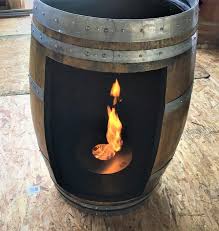
The resulting product of this process is a colourless, almost odourless, volatile and highly flammable liquid. Ethanol burns blue and the flame is not always detectable in normal light. This is one of the challenges of creating ethanol fire pits: how to create an aesthetically pleasing flame. Indeed, the unseen technology behind ethanol burning fire pits is the way that the burning action draws air into the burner to create a yellow flame.
The key advantage to ethanol fireplaces and fire pits is that they burn entirely cleanly – the products of ethanol combustion are carbon dioxide and water. They can be burned indoors without venting and placed pretty much anywhere that can provide for clearance to flammable objects and enough air exchange. This usually means that ethanol fire pits are easier to install and can be moved if desired. It also means that when used for heating, they are 100% efficient, in that all the heat is transferred into the space. Ethanol is often touted as green or ‘eco’ due to its renewable sources and clean burning.